


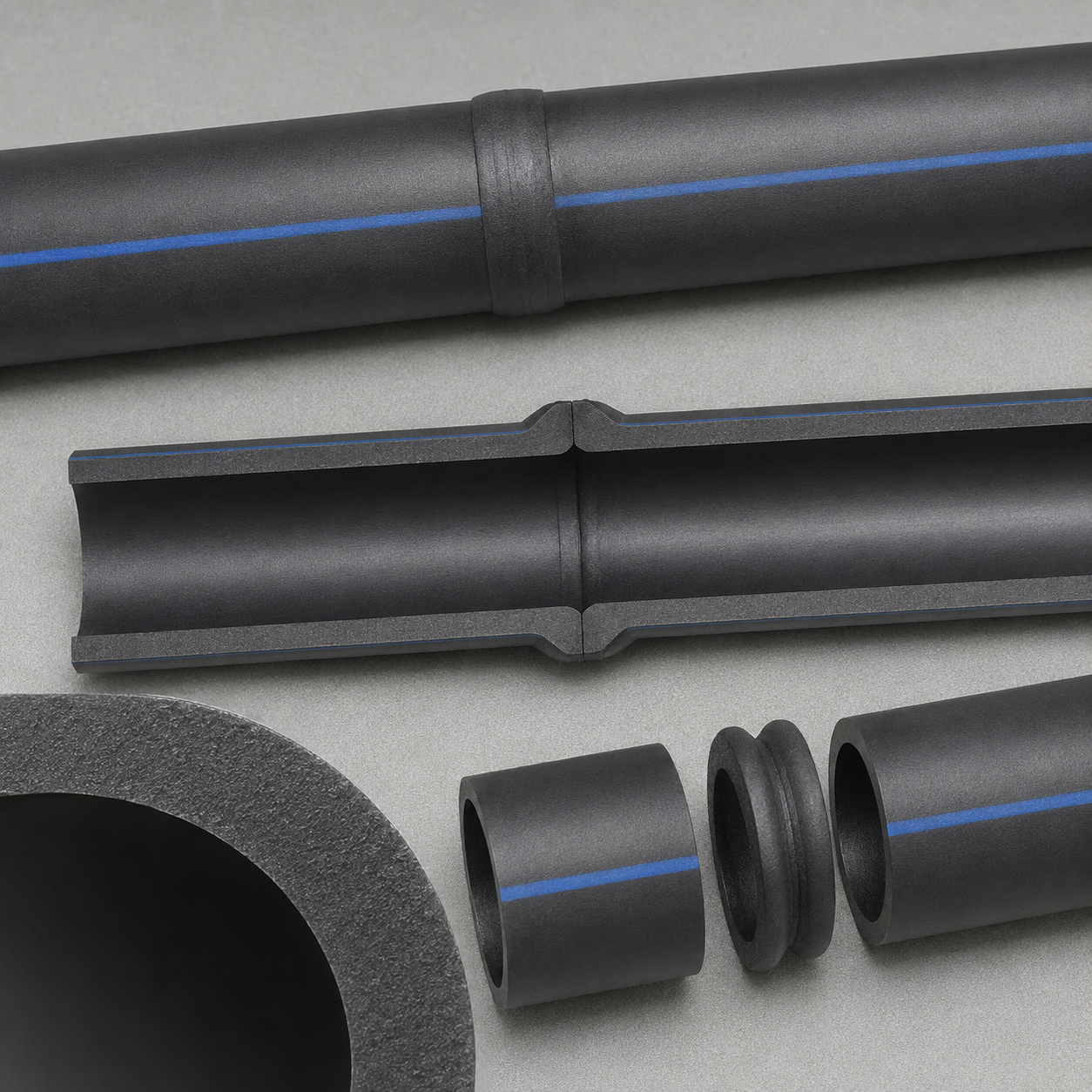
PN 10
HDPE pipe PE100 DN110 PN10
PE100, SDR 17 pipe for conveying water and mining solutions, joined by butt fusion or electrofusion.

Polyethylene conveyance and networks
PE100 polyethylene pipes for water, tailings, leachate, drainage, and industrial processes.
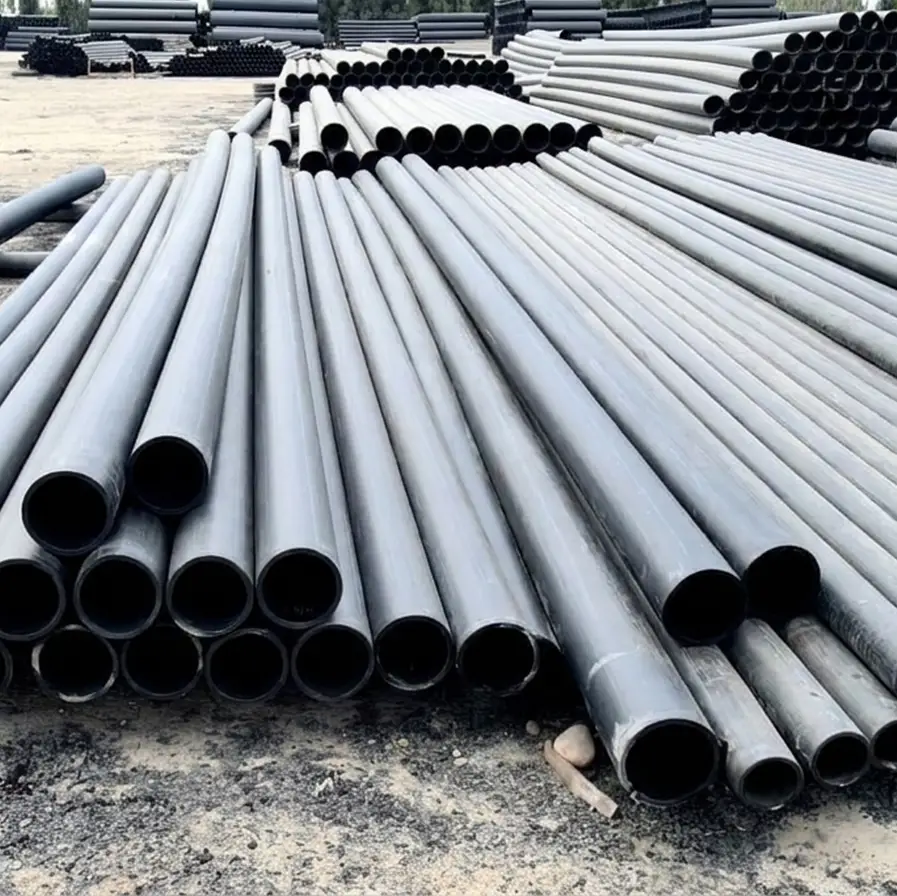
Diameter, pressure, and joining are coordinated with actual pipeline operation
HDPE pipes are used in conveyance systems requiring strength, flexibility, and continuity through fusion joints. The specification must respond to flow, operating pressure, transported fluid, temperature, and route conditions.
Pipeline performance does not depend only on the pipe. Fittings, transitions, anchors, bending radii, joining equipment, and execution controls must be resolved as part of the same system.
Review each data sheet for properties, formats, and application criteria. Availability and configuration are confirmed for each project.
PN 10
PE100, SDR 17 pipe for conveying water and mining solutions, joined by butt fusion or electrofusion.
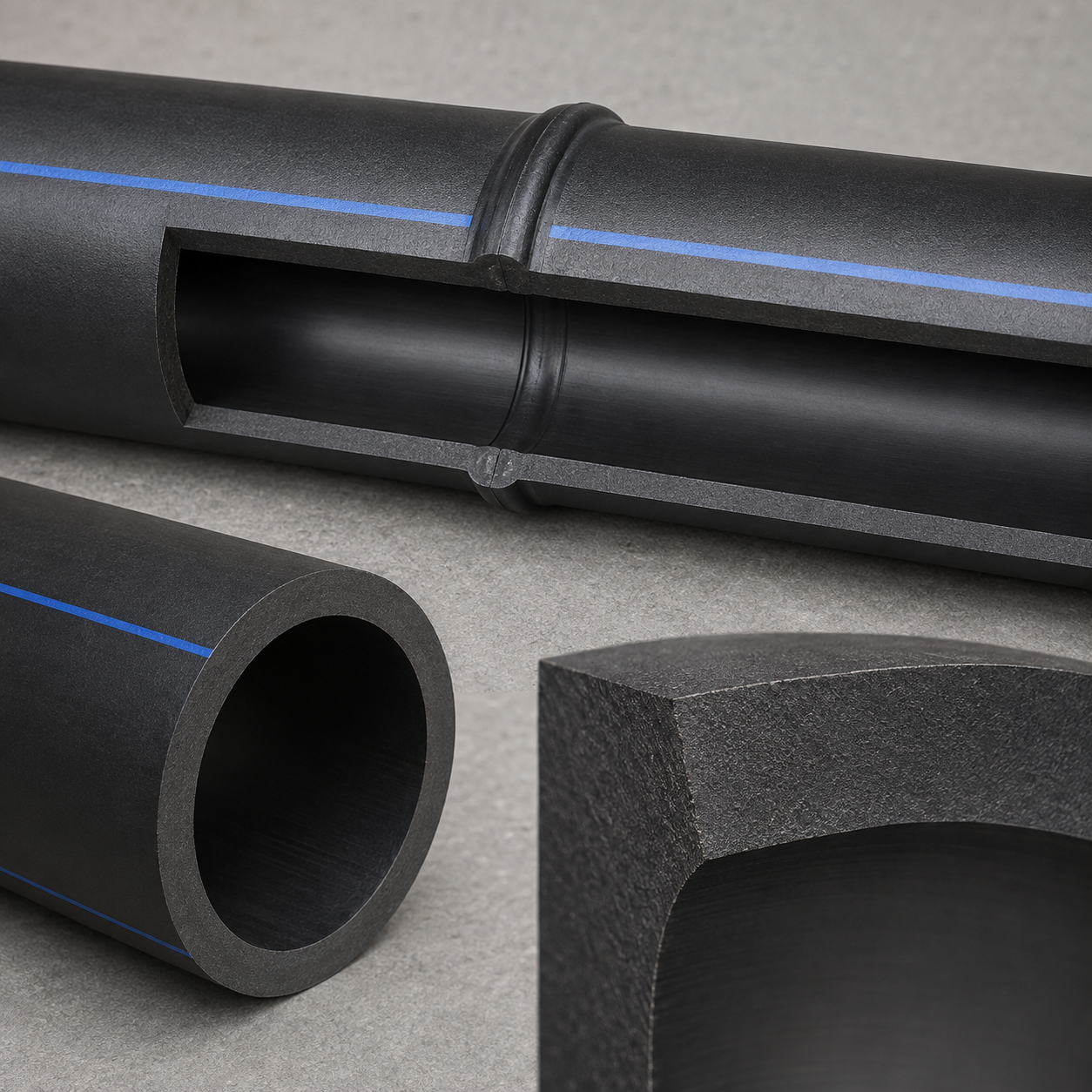
PN 16
PE100, SDR 11 pipe for mining pipelines, slurry transport, and pressurized networks.
The pressure class must be compared with operating conditions and expected transients. Hydraulic diameter, chemical compatibility, routing, connections, and the required fusion procedure are also reviewed.
Share drawings, specifications, estimated quantities, and site conditions so the applicable alternative can be reviewed before quoting.
Project integration
Planning considers installation lengths, access, bending radii, crossings, and connection points. It must also allow space to operate butt-fusion or electrofusion equipment and handle sections without causing damage.
Preparation, alignment, cleanliness, and fusion parameters must be controlled during execution. Connections to other materials, valves, or structures require pieces and procedures compatible with pipeline pressure and service.
Initial answers to organize the available information. The final definition must consider the particular conditions of each project.
Send us the application, location, quantities, and timeline so we can guide the product and required service scope.
Assess requirementThe product can be integrated with technical review, logistics coordination, and on-site execution according to the project scope.
On-site butt fusion, electrofusion, installation, and pipeline repair.
Components configured for connections, changes in direction, and branches.
Coordination of lengths, pieces, and deliveries according to the installation area.