



Textured HDPE geomembrane 1.5 mm
Textured finish on both sides to increase the friction angle with supporting soil on steep slopes.
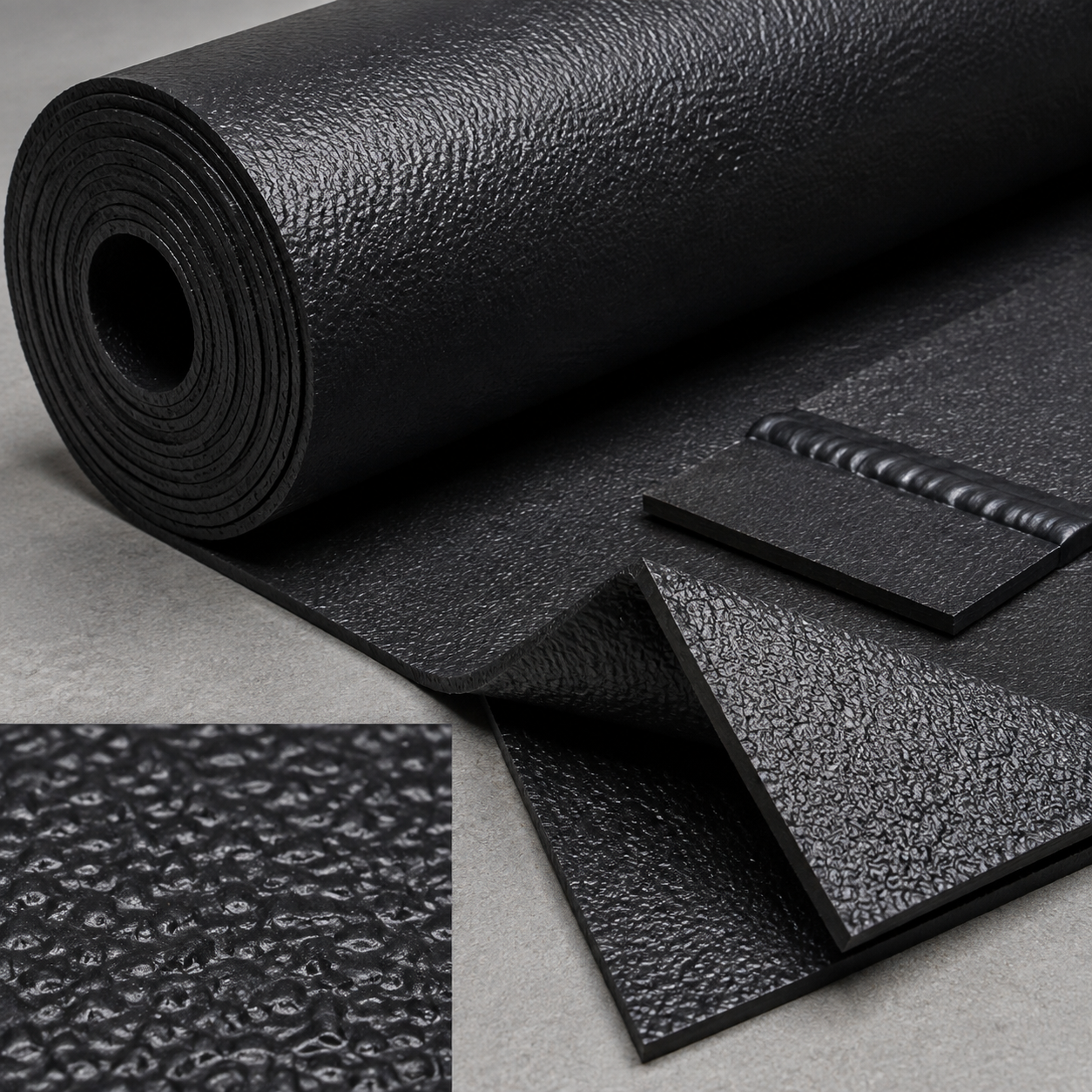
Geomembrane · GM-01
Technical description
The 1.5 mm textured HDPE geomembrane is used as an impermeable barrier when the design combines containment with inclined surfaces. The texture increases interaction with soil, geotextile, or other adjacent layers and helps control sliding between materials. This is especially relevant on slopes where a smooth sheet may not provide the interface friction required by the project engineering.
The 1.5 mm thickness is a common solution for mining, hydraulic, and sanitation works requiring mechanical strength, low permeability, and welded continuity. Selection must consider slope, slope height, support type, installation stress, environmental exposure, and characteristics of the contained fluid. Texture does not replace geotechnical analysis: it forms part of a system that may also include protective geotextiles, drainage, anchors, and cover layers.
Reference sheet
Specifications
- Material
- High-density polyethylene (HDPE)
- Nominal thickness
- 1.50 mm
- Density
- ≥ 0.94 g/cm³
- Finish
- Textured on both sides
- Tensile strength
- ≥ 27 kN/m (ASTM D6693)
- Elongation at break
- ≥ 700 % (ASTM D6693)
- Puncture resistance
- ≥ 480 N (ASTM D4833)
Use criteria
Recommended application
Slopes of leach ponds, tailings facilities, channels, and reservoirs on terrain steeper than 2H:1V where additional friction with the supporting soil is required.
Relevant characteristics
Product contribution
- Greater friction at slope interfaces.
- Continuity through thermal welding.
- Configuration for demanding containment systems.
Typical uses
System applications
- Leach ponds
- Impoundments and storage facilities
- Sloped channels
- Reservoirs with slopes
Selection criteria
Required information
- Drawings with slopes, elevations, anchors, and total area.
- Fluid type, exposure, and expected service life.
- Subgrade preparation and planned protective layers.
- Installation plan, seams, tests, and required deliverables.
Installation and coordination
Execution considerations
Before deployment, the surface is checked to ensure it is graded, compacted, and free of elements that could cause cuts or punctures. Rolls are positioned according to the installation sequence, minimizing unnecessary handling and orienting panels to match the geometry. On slopes, seam layout, anchor trenches, and temporary wind control must be coordinated before welding begins.
Seams are executed with HDPE-compatible equipment and controlled according to the quality plan defined for the project. Transitions with pipes, structures, sumps, and slope changes require specific details. To quote supply and installation, provide the area, drawings, slopes, thickness, required texture, access, planned date, and requested tests.
Frequently asked questions
Before requesting a quotation
- When is a textured geomembrane preferred?
- When the project needs to increase friction between the geomembrane and contacting layers, mainly on slopes or surfaces where there is a risk of sliding. The need and texture type must be defined by the system design criteria.
- Can it be combined with geotextile?
- Yes. A geotextile can provide protection, separation, or filtration depending on the section. Its mass and strength must respond to the support, cover material, and loads expected during installation and operation.
- Can GEOALISI supply and install the material?
- The request may cover supply only or a solution including logistics, deployment, welding, detail resolution, and installation controls. The scope is prepared according to technical information and site access conditions.
Next step
Confirm compatibility before purchasing
We review application, quantities, supply format and installation requirements.