



Drainage geonet 5 mm
Biplanar high-density polyethylene structure with high flow capacity under low load.
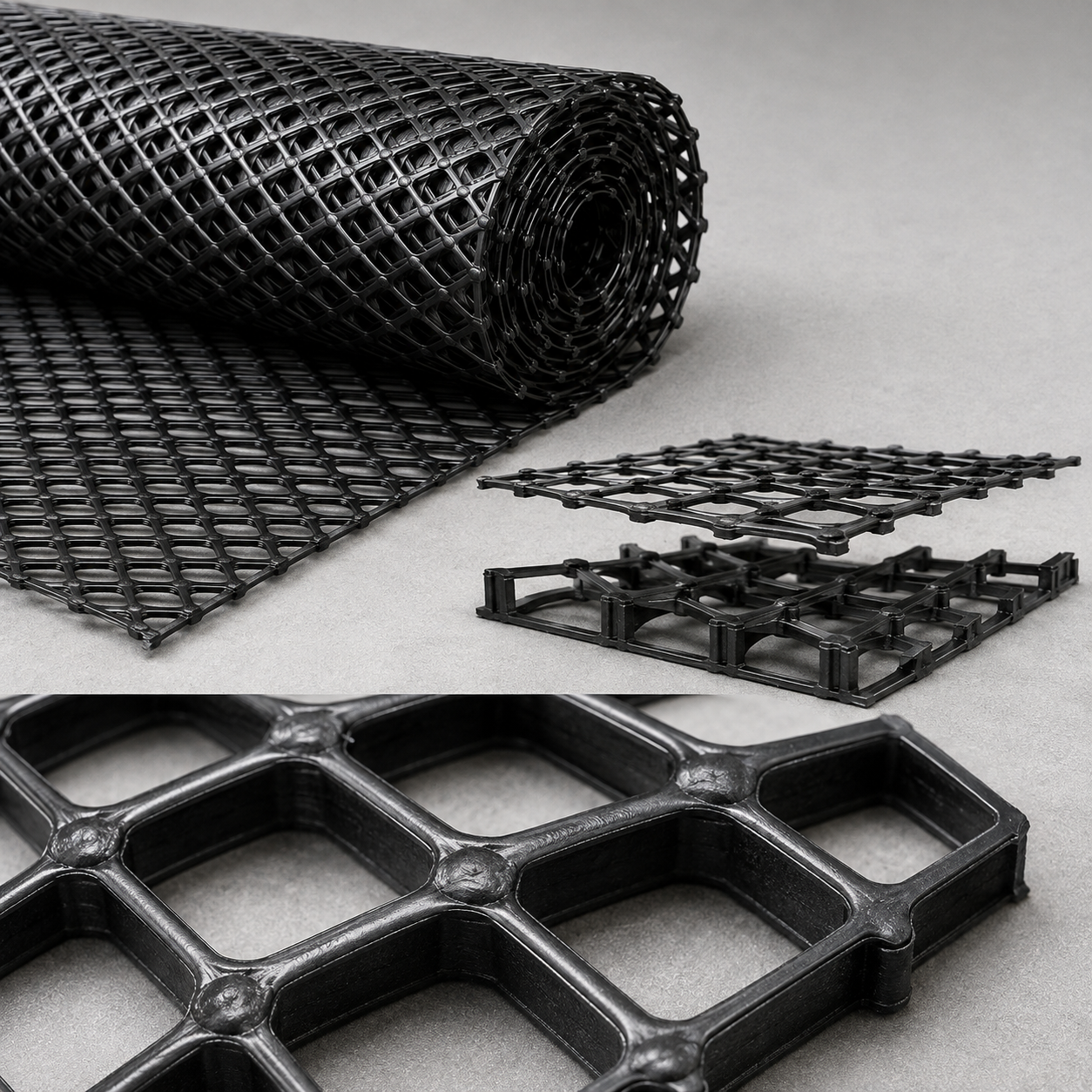
Geonet · GT-02
Technical description
The 5 mm drainage geonet creates a continuous space for transporting liquids or gases within a confined system. Its polyethylene core maintains flow channels between adjacent layers and can replace part of the thickness occupied by granular drainage in certain sections. It can be supplied alone or integrated with geotextile to create a drainage geocomposite.
Nominal thickness alone does not determine product capacity. Transmissivity changes with normal load, gradient, duration, temperature, and contacting materials. The product must therefore be selected from the required flow and confinement conditions. In fills, covers, walls, or systems beneath geomembrane, the route to collectors and outlets must also be resolved.
Reference sheet
Specifications
- Material
- HDPE
- Thickness
- 5.0 mm
- Transmissivity
- ≥ 1.0 × 10⁻³ m²/s (a 100 kPa, gradiente 0.1)
- Roll width
- 2.0 / 4.0 m
Use criteria
Recommended application
Drainage layer beneath geomembranes in landfills, mining, and hydraulic works; also for gas drainage in landfill cells.
A poorly resolved outlet can limit performance even when the drainage core has sufficient capacity.
Relevant characteristics
Product contribution
- Fluid conveyance in a thin layer.
- Geocomposite configuration.
- Continuous drainage at confined interfaces.
Typical uses
System applications
- Drainage beneath liner
- Leachate collection
- Gas removal
- Walls and covers
Selection criteria
Required information
- Design flow and hydraulic gradient.
- Confinement load and allowable deformation.
- Need for geotextile on one or both sides.
- Outlet, overlap, and continuity details.
Installation and coordination
Execution considerations
Rolls are deployed in the intended flow direction and connected without interruptions that block the drainage plane. Transitions, overlaps, and temporary fasteners must prevent movement while subsequent layers are placed. If the product includes geotextile, filter continuity is maintained and folds that reduce the effective drainage section are avoided.
The quote should state area, slope, expected flow or function, confinement load, flow length, and collector locations. It also defines whether geotextile is required on one or both sides. Coordination with geomembranes, drainage pipes, and outlet details is necessary for the product to operate as part of the system rather than as an isolated layer.
Frequently asked questions
Before requesting a quotation
- What is the difference between a geonet and a geocomposite?
- The geonet is the drainage core. A geocomposite combines that core with one or more bonded geotextiles that can filter particles and protect the flow space according to the specified configuration.
- Do five millimeters guarantee the required flow?
- No. Capacity must be reviewed through transmissivity under representative load, gradient, and contact conditions. Two cores of the same thickness can perform differently because of their geometry and composition.
- How is it connected to an outlet?
- The drainage plane must terminate at collectors, pipes, or outlets able to receive the flow without restricting the section. Terminations depend on geometry and must be defined in the project details.
Next step
Confirm compatibility before purchasing
We review application, quantities, supply format and installation requirements.