



TPO membrane 1.2 mm
Polyester-reinforced thermoplastic polyolefin, reflective and hot-air weldable.
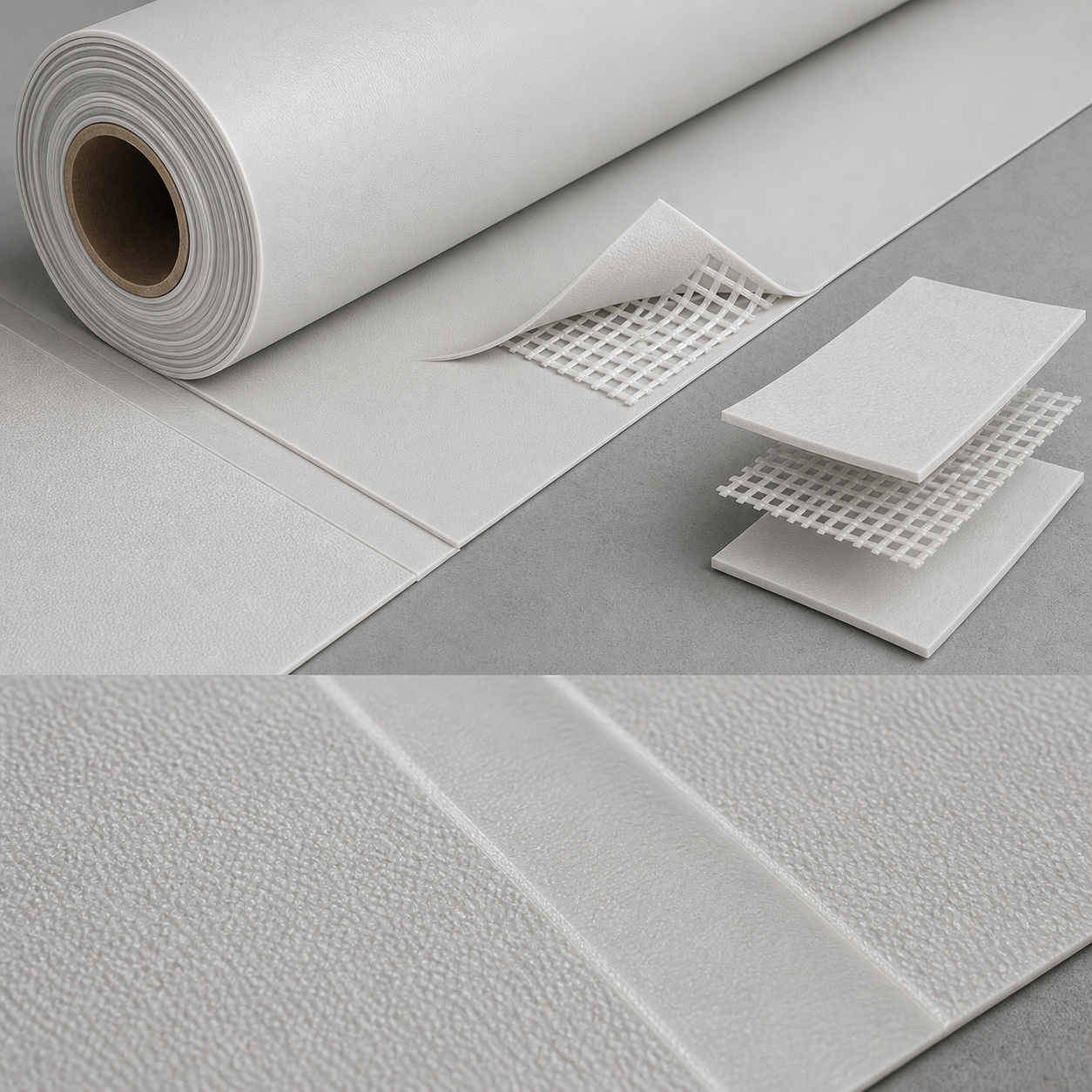
TPO membrane · MS-01
Technical description
The 1.2 mm TPO membrane is a reinforced thermoplastic sheet for roof waterproofing. Its panels are joined using hot air, forming a continuous surface that can remain exposed. The light finish helps reflect solar radiation, and the internal mesh provides stability for mechanically fastened or adhered systems.
The product must be selected as part of the complete roof assembly. Support, vapor barrier, insulation, fasteners, slopes, and water drainage affect performance. Wind loads, traffic, exposure, equipment locations, and the number of details must also be considered. More penetrations and plane changes increase installation complexity even when the total area is small.
Reference sheet
Specifications
- Material
- Thermoplastic polyolefin (TPO)
- Thickness
- 1.20 mm
- Reinforcement
- Polyester mesh
- Tensile strength
- ≥ 1100 N (ASTM D751)
- Solar reflectance
- ≥ 0.80 (inicial, ASTM E903)
Use criteria
Recommended application
Large industrial, logistics, and commercial roofs using mechanically fastened or adhered systems.
Planning by sections helps keep areas operational, organize transitions, and protect completed panels. In occupied buildings, coordination with utilities, circulation, and weather conditions forms part of the execution scope.
Relevant characteristics
Product contribution
- Hot-air-welded seams.
- Light-colored, highly reflective surface.
- Reinforcement for large roofs.
Typical uses
System applications
- Industrial buildings
- Logistics centers
- Commercial roofs
- Roof rehabilitation
Selection criteria
Required information
- Complete roof assembly.
- Wind loads and fastening layout.
- Quantity and geometry of special details.
- Sectioning and continuity of work areas.
Installation and coordination
Execution considerations
The support must be clean, dry, stable, and prepared to receive the system layers. Rolls are distributed according to the fastening layout and work direction. Seams are made with hot-air equipment, adjusting parameters to environmental conditions and verifying continuity before moving over the completed area.
Parapets, drains, joints, ducts, and equipment bases require TPO-compatible pieces and reinforcement. Quotes consider area, height, access, slopes, support, insulation, intended fastening, and special details. For rehabilitation, the condition of the existing waterproofing and any moisture within the roof must also be reported.
Frequently asked questions
Before requesting a quotation
- What advantage does hot-air welding offer?
- It joins thermoplastic panels to form a continuous surface. The result depends on preparation, temperature, speed, pressure, and environmental conditions, so seams must be verified during execution.
- Are TPO and EPDM installed the same way?
- No. TPO is thermoplastic and its seams are made with hot air; EPDM is elastomeric and uses its own joining systems. Accessories and the resolution of some details also differ.
- Does the white color eliminate roof heating?
- The light surface can improve reflectance compared with dark finishes, but the building's thermal performance also depends on insulation, ventilation, climate, orientation, and the complete roof assembly.
Next step
Confirm compatibility before purchasing
We review application, quantities, supply format and installation requirements.