



EPDM membrane 1.1 mm
Ethylene propylene diene rubber resistant to UV, ozone, and extreme temperatures.
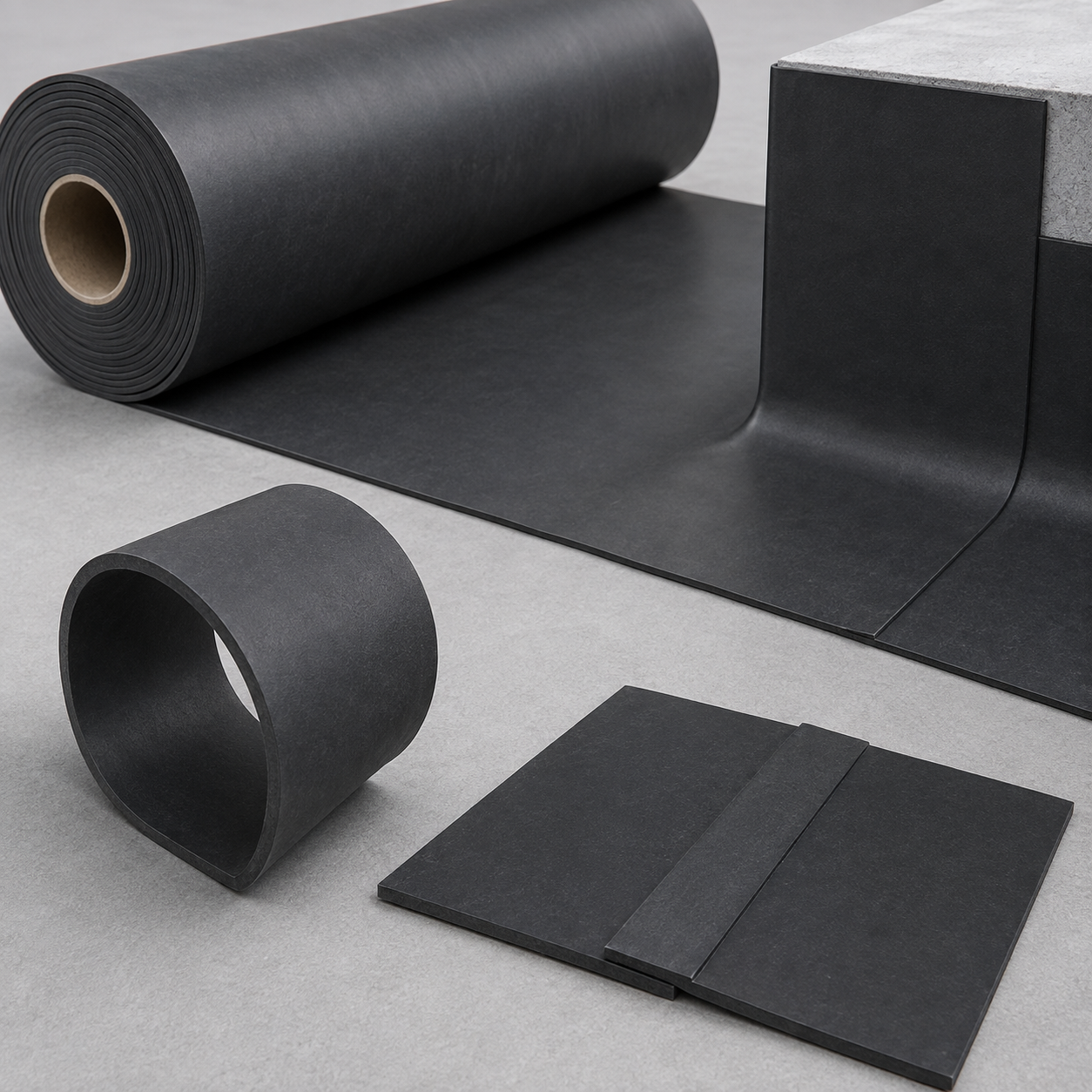
EPDM membrane · MS-02
Technical description
The 1.1 mm EPDM membrane is an elastomeric sheet used to waterproof roofs and surfaces exposed to temperature changes, solar radiation, and support movement. Its flexibility allows it to adapt to varied transitions and geometries, while wide panels can reduce the number of joints needed on large surfaces.
The material forms part of a roofing system that includes the support, insulation, vapor barrier where applicable, fastening method, drainage, and finishes. Selecting thickness is not enough: wind loads, slopes, maintenance traffic, compatibility with existing materials, and the number of penetrations must be reviewed. The solution may be adhered, ballasted, or fastened according to the design and building conditions.
Reference sheet
Specifications
- Material
- EPDM rubber
- Thickness
- 1.10 mm
- Tensile strength
- ≥ 9.0 MPa (ASTM D412)
- Elongation at break
- ≥ 300 % (ASTM D412)
- Ozone resistance
- No cracks after 100 h (ASTM D1149)
Use criteria
Recommended application
Ballasted, adhered, or mechanically fastened roofs on industrial buildings, logistics centers, and green roofs.
For rehabilitation projects, the roof age, previous repairs, and presence of moisture are also relevant. This information distinguishes between localized work and replacement or overlay of an entire surface.
Relevant characteristics
Product contribution
- Flexibility under support movement.
- Resistance to UV radiation and ozone.
- Wide panels to reduce joints.
Typical uses
System applications
- Industrial roofs
- Green roofs
- Ballasted roofs
- Waterproofing details
Selection criteria
Required information
- Roofing system and support condition.
- Exposure, wind, traffic, and permanent loads.
- Transitions, drains, and penetrations.
- Fastening method and installation sequence.
Installation and coordination
Execution considerations
Before laying the membrane, the support is checked to ensure it is continuous, stable, dry, and compatible with the system. Panel layout must reduce joints and avoid stress at corners, parapets, plane changes, and equipment. Joints, patches, and accessories are executed with products specified for EPDM, respecting cleaning, preparation, and application times.
Drains, overflows, ducts, equipment bases, and structural joints concentrate leakage risk and require specific details. Assessing the work requires area, roof drawings, slopes, support material, insulation, penetrations, existing condition, and accessibility. The scope may include supply, installation, and finish resolution.
Frequently asked questions
Before requesting a quotation
- What roofs use EPDM?
- It is used on industrial, commercial, ballasted, adhered, and green roofs when the complete system is compatible. Its flexibility is useful where there is thermal movement or geometry with numerous transitions.
- Are the joints welded with hot air?
- EPDM normally uses manufacturer-specific joining systems and accessories, different from the thermoplastic welding used for TPO. Surface preparation and execution procedures are critical for continuity.
- Can it be installed over an existing roof?
- It can be assessed as a rehabilitation solution, but trapped moisture, stability, compatibility, slopes, and support condition must first be reviewed. The new membrane alone does not correct construction defects or inadequate drainage.
Next step
Confirm compatibility before purchasing
We review application, quantities, supply format and installation requirements.